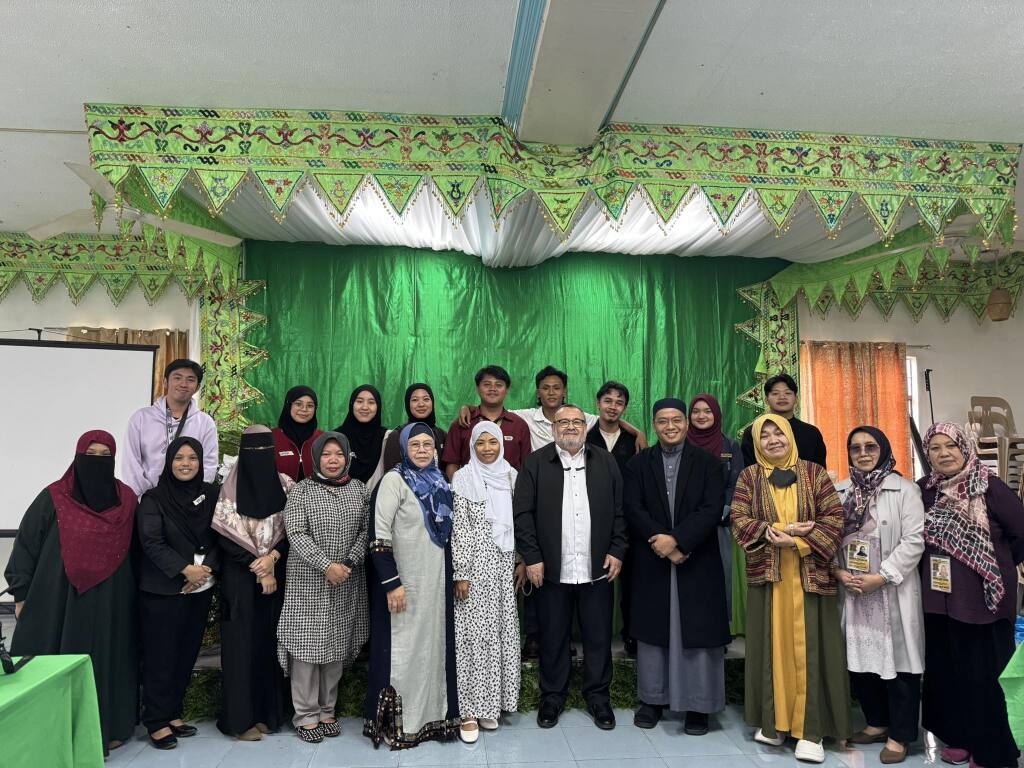
On February 04, the next generation of peacebuilders gathered for a profound session of mentorship and reflection. Engr. Ossama Al-azzouni, Chairman and Founder of the International Center for Social Research, Peace and Development, met with student leaders to bridge the gap between spiritual wisdom and practical leadership.
The meeting served as both a reunion and a strategy session for students who first found their footing during the 2025 Mindanao Week of Peace Youth Peace Camp.
A New Perspective on “Problems”
During the dialogue, the atmosphere shifted from formal to deeply personal. When asked about their aspirations, one student shared a wish many of us can relate to: a life without problems.
Engr. Al-azzouni’s response offered a powerful paradigm shift. He reminded the youth that challenges are not obstacles to a good life, but an essential fabric of it.
“Problem is part of our life,” he shared. “If you truly understand its purpose, you will appreciate the problem.”
He emphasized that these challenges are the very tools that refine a leader’s character. To ground this resilience, he highlighted the importance of the Qur’an as a guide for daily life and a source of strength, especially during the upcoming month of Ramadhan, encouraging the students to engage with it in whatever language speaks most clearly to their hearts.
From Camp to Community Action
These student leaders are no strangers to the work of peace. Their journey began under the guidance of the Institute for Peace and Development in Mindanao (IPDM) and the PeaceCore, a dedicated group of mentors including:
• Chief Bae Rahana Ganda
• Dr. Anisah M. Laguindab
• Dr. Linang Macabalang
• JD Aliah P. Cali-Pascan, DPA
• Prof. Khayronesah Abbas, Ph.D.
Having successfully navigated the 2025 Youth Peace Camp, these students are now moving beyond the “workshop” phase. They are currently planning to formally organize themselves, ensuring that the momentum gained during the Mindanao Week of Peace translates into sustainable, long-term community projects.
The Road Ahead
The transition from a student leader to a community organizer is rarely easy—as Engr. Al-azzouni noted, there will be problems. However, with the spiritual grounding of the Qur’an and the continued mentorship of the PeaceCore, these young leaders are proving that they don’t just want peace; they are willing to build it, one “appreciated problem” at a time.