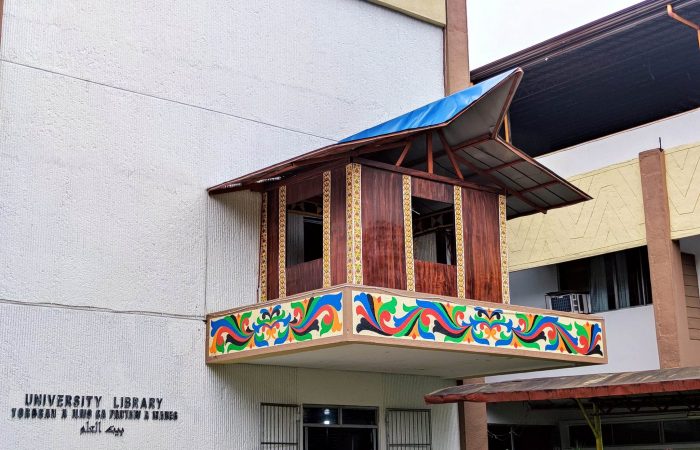
Originally, the University Library was housed in one of the classrooms in the Academic Building. Later, it was relocated to the Library-Museum Building, which was completed in the early 1962-1963 academic year. The library was well-stocked with general education books and basic reference materials. The University purchased a large number of books, which were supplemented by donations from Stanford University, the Asia Foundation, the University of the Philippines, Caltex, UNICEF, AID, and individuals.
Benifredo Sta. Maria, the first University Librarian, distributed textbooks to students in all years of all seven colleges of the University at the start of each term and collected them at the end. The College of Liberal Arts had the highest number of courses with 7,704 textbook volumes for 140 courses, followed by the College of Engineering with 83 courses, the College of Agriculture with 29 courses, the College of Business Administration with 28 courses, the College of Education with 31 courses, the College of Fisheries with 19 courses, and the College of Community Development and Public Administration with 18 courses. In total, there were approximately 350 courses with textbooks. Textbooks were used in approximately 82% of all courses across all colleges, with the College of Liberal Arts having the highest percentage of usage (94%).
Late in the year, the University appointed Mrs. Leticia E. Aquino, a former National Library librarian, as the new head of the University Library. She took over the position following the departure of the previous University Librarian, Mr. Benifredo Sta. Maria, who left to pursue his graduate studies in library science at the University of Hawaii with a grant from the East-West Center.