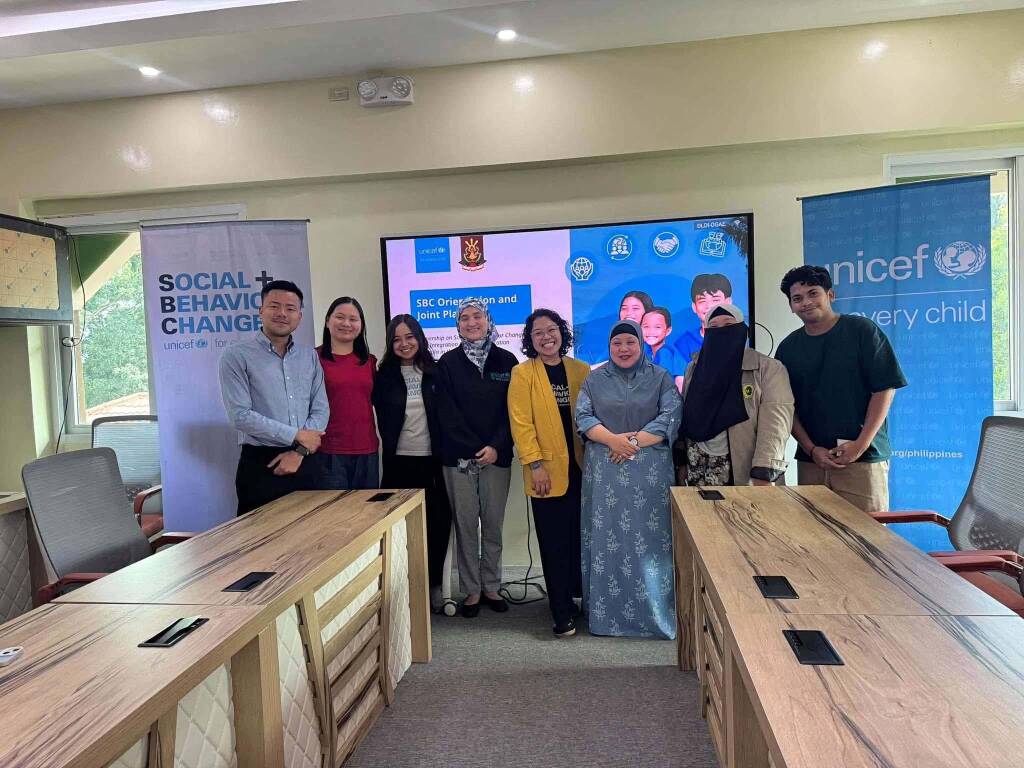
By: Aliah P. Cali-Pascan, JD.,DPA
MARAWI CITY, Philippines — Representing the Institute for Peace and Development in Mindanao (IPDM), Sittie Hayna M. Cauntongan, MAE, joined academic leaders and development experts for the Orientation and Joint Planning on Social and Behavior Change (SBC) in Higher Education Curricula in the Philippines at Mindanao State University (MSU), Marawi City.
Organized on November 4, 2026, in collaboration with UNICEF Philippines and Data and Implementation Sciences for Health, Inc. (DISH), the program established a strategic roadmap for embedding behavioral science into academic frameworks.
Workshop Narrative & Key Sessions
The gathering began with an invocation and the singing of the National Hymn, leading into opening remarks from Prof. Astainee T. Macatanong, JD, Chairperson of the MSU Department of Communication and Media Studies, and Dr. Minerva-Saminah Mambuay Naga, Vice President and Vice Chancellor of the MSU Office of the Vice President for Academic Affairs, both emphasizing the university’s mandate to drive socially responsive education.
The orientation transitioned into core planning as Amina Rafia Zeina Lim, UNICEF Mindanao SBC Officer, provided a comprehensive overview of ongoing behavioral change initiatives across the region. Building on this context, Emee Lei Valdehuesa, Project Lead at DISH, outlined the core objectives, expectations, and target outputs required to align tertiary curricula with real-world development needs.
To build active collaboration among interdisciplinary representatives, DISH Project Research Associates Arjun Jay Libato and Gabrielle Mercado facilitated targeted icebreaker activities. The technical depth of the event unfolded through detailed SBC orientation modules delivered by UNICEF officers Amina Rafia Zeina Lim and Alexandra Acedillo, alongside Emee Lei Valdehuesa, leading into an afternoon of strategic planning. The day concluded with a unified synthesis summarizing participant insights and establishing actionable steps for curriculum integration.
What SBC Integration Does for the Curriculum
Integrating Social and Behavior Change (SBC) strategies transforms traditional higher education by:
- Bridging Theory and Action: Shifts learning outcomes beyond standard knowledge acquisition toward measurable behavioral outcomes, enabling students to drive tangible community impact.
- Fostering Peace & Development: Provides future leaders with evidence-based communication frameworks to address root causes of conflict, reduce social stigma, and promote local peacebuilding.
- Strengthening Evidence-Based Research: Introduces data-driven behavioral methodologies, human-centered design, and socio-ecological modeling into student research and academic programs.
Alignment with Sustainable Development Goals (SDGs)
This joint planning initiative directly advances key United Nations Sustainable Development Goals:
- SDG 4: Quality Education — Upgrades tertiary curricula with transformative, action-oriented, and context-sensitive learning frameworks.
- SDG 16: Peace, Justice, and Strong Institutions — Enhances institutional capacities to foster peaceful, inclusive, and cohesive communities through behavioral interventions.
- SDG 17: Partnerships for the Goals — Exemplifies multi-sectoral collaboration between higher education institutions (MSU/IPDM), international organizations (UNICEF), and specialized research entities (DISH).