Aliah P. Cali-Pascan, DPA, JD.
In the heart of Lanao del Sur, a new generation of leaders is emerging—not just as observers of history, but as active architects of peace. Among them is Mohammad Ali A. Mamondiong, a student leader whose journey from the halls of discourse to the regional parliament is redefining what it means to be a young peacemaker in the Ranao region.
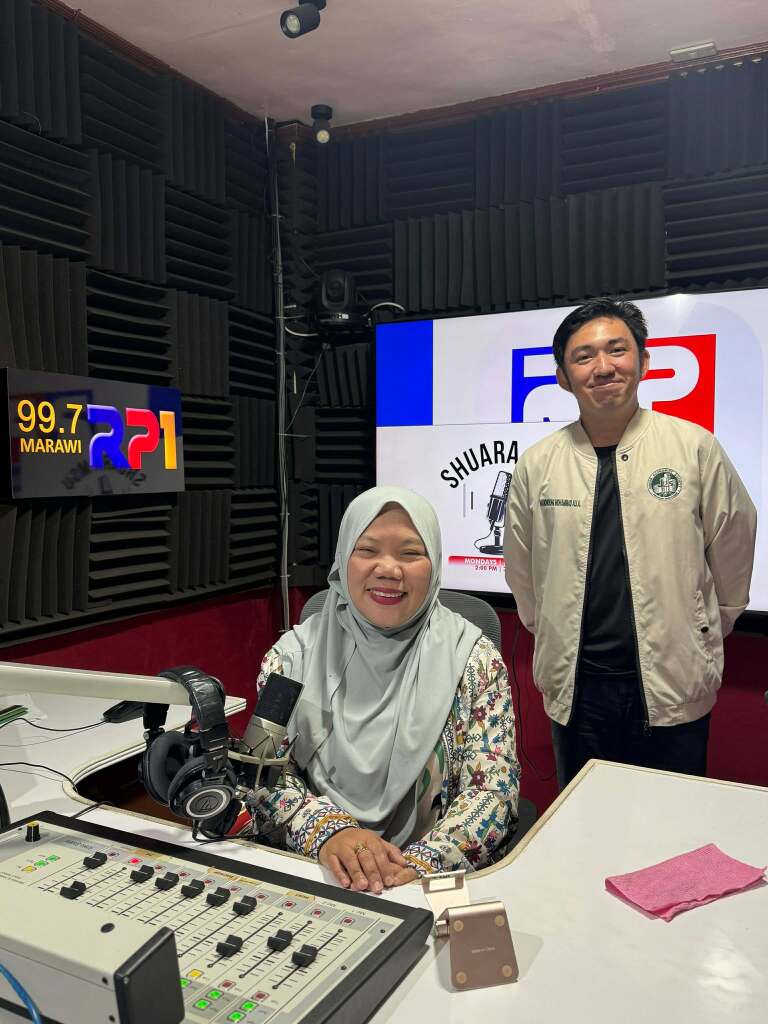
In an exclusive interview on #SHUARAMSU, a flagship program of the Institute for Peace and Development in Mindanao (IPDM) aired via Radyo Pilipinas Marawi 99.7 MHz, Mamondiong shared a perspective that is both profound and practical. For him, peace isn’t just a political treaty or the absence of noise. “Peace, for me, is satisfaction,” he remarked. It is the internal and communal sense of fulfillment that arises when people feel heard, valued, and secure.
Learning Through Representation Mamondiong’s leadership is grounded in continuous growth. Representing IPDM in various youth leadership trainings, he has moved beyond theory into the actual practice of advocacy. “I learned a lot of things when I represented IPDM in trainings as a youth leader,” he shared. “These experiences provided me the tools to navigate the complex social landscape of our community.”
The Heart of Maranao Peace: Kapamagawida When asked about the cultural foundations of peace, Mamondiong pointed to a deeply rooted Maranao trait: Kapamagawida. This concept of mutual support and “carrying one another” is what he believes to be the secret ingredient for a stable society. To him, Kapamagawida is more than a tradition; it is a lifestyle of looking out for your neighbor, ensuring that no one is left behind. “I am thankful to my brothers, Talal Maronsing and Zulkiflie Sangcopan, for being there, not only for good times but also in bad days,” he added. It depicts the idea that in this generation, you need to have real companions who support and walk with you along the way.
The Logic of Peacebuilding Reflecting on his time as a youth leader and his participation in the Regional Parliamentary Assembly, Mamondiong highlighted the importance of technical skills. He noted that they used “calibration” and economic concepts like “wants and needs” to argue effectively for community interests. He credited much of this development to his mentors, specifically mentioning Jeff Adiong, who helped bridge the gap between student activism and regional governance.