By: Aliah Pacalna Cali-Pascan, Sh.L., JD., DPA
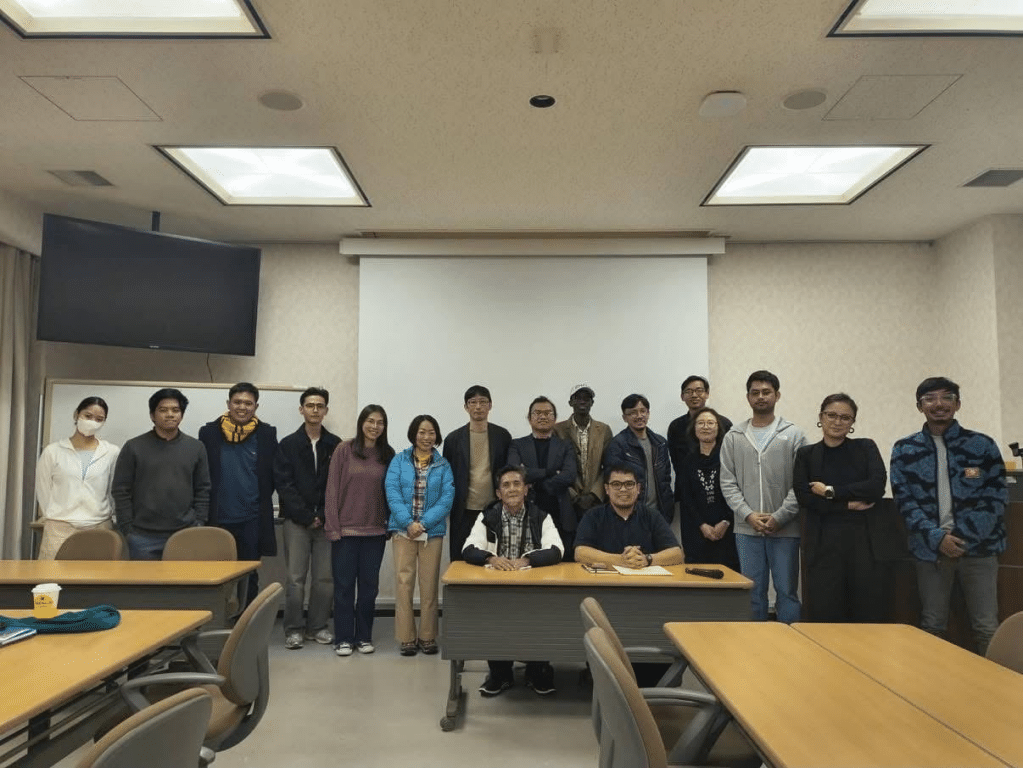
Dr. Tirmizy E. Abdullah, LPT, RSW, Professor and Peace Research Officer of the Institute for Peace and Development in Mindanao (IPDM), Mindanao State University–Marawi City, delivered a lecture entitled “The Bangsamoro Struggle and Peacebuilding: A Meranaw Perspective” at Hiroshima University, Japan.
The lecture was organized through the International Peace and Coexistence Program of the Graduate School of Humanities and Social Sciences, Hiroshima University, in collaboration with the JSPS Research Project, “Ending Armed Conflict and Peacebuilding in the Southern Philippines: An Empirical Study on the Establishment of the New Autonomous Government.”
The seminar was moderated by Dr. Dahlia Simangan, Associate Professor of International Relations at Hiroshima University’s Graduate School of Humanities and Social Sciences. It brought together students, scholars, and researchers with academic and research interests in the Bangsamoro, Mindanao, peacebuilding, and conflict transformation. Among those in attendance were Prof. Hiromi Yamauchi and Assistant Professor Tatsuya Koyama of Hiroshima University, and Dr. Masako Ishii, Professor at Rikkyo University, among others. The seminar also gathered international students from Hiroshima University, including Mr. Raihan Yusoph, an Assistant Professor at Mindanao State University–Marawi City who is currently pursuing his doctoral degree at Hiroshima University through a scholarship program.
In his lecture, Dr. Abdullah examined how distinct historical experiences, local struggles, political dynamics, and post-conflict challenges have shaped the Bangsamoro political landscape, particularly in the context of the September 14, 2026 parliamentary elections in the Bangsamoro Autonomous Region in Muslim Mindanao (BARMM). Covering parts of western Mindanao and the Sulu Archipelago, the BARMM is home to diverse Muslim ethnolinguistic communities, Indigenous Peoples, and Christian settlers. However, dominant narratives often homogenize these diverse communities under the broad identity of “Moro,” overlooking their distinct histories, identities, political experiences, and aspirations.
Drawing from a Meranaw perspective, Dr. Abdullah gave particular attention to the 2017 Marawi Siege and the continuing displacement of Meranaw communities, situating these experiences within broader discussions on transitional justice and reconciliation (TJR), land and property issues, normalization, and the challenges of the Bangsamoro political transition. He emphasized the importance of understanding the Bangsamoro struggle not merely as a political negotiation or the establishment of an autonomous government, but also as a continuing struggle for historical justice, self-determination, recognition, and the protection of the rights and dignity of affected communities.
The open forum provided an opportunity for an engaging exchange of ideas and perspectives. Participants raised questions concerning the integration of Bangsamoro history into the national educational curriculum, the influence of traditional politics in the Bangsamoro, and the extent to which the objectives and commitments of the peace agreements have been realized. These discussions highlighted the importance of critically examining the gains, limitations, and continuing challenges of the Bangsamoro peace process.
The lecture was further enriched by the sharing of Mr. Edres Gumander of Barira, Maguindanao, who offered personal reflections and insights drawn from his experiences in the Bangsamoro movement. His contribution provided a valuable grassroots perspective, connecting the historical and political discussions with the lived experiences of those who have been part of the struggle for peace and self-determination.
Following the seminar, Dr. Abdullah and Mr. Gumander were warmly welcomed by Hiroshima University professors and Filipino students at a fellowship dinner. The gathering provided another opportunity to strengthen academic and personal connections among scholars, students, and peace advocates.
The following day, the visitors were given a tour of Hiroshima University, the Hiroshima Peace Memorial Museum, and the historic Miyajima Island in Hiroshima Prefecture. The visit to the Peace Memorial Museum offered an important opportunity to reflect on the enduring lessons of war, human suffering, reconciliation, and the shared responsibility of building a more peaceful world.
Dr. Tirmizy E. Abdullah is currently a Visiting Professor at Rikkyo University in Tokyo, Japan, under the university’s Invited Visiting Scholar Program. His academic and peacebuilding engagements in Japan contribute to strengthening international academic exchanges and broadening discussions on the Bangsamoro experience, Mindanao peacebuilding, and the continuing pursuit of just and sustainable peace.