By: Johara D. Alangca-Azis, PhD
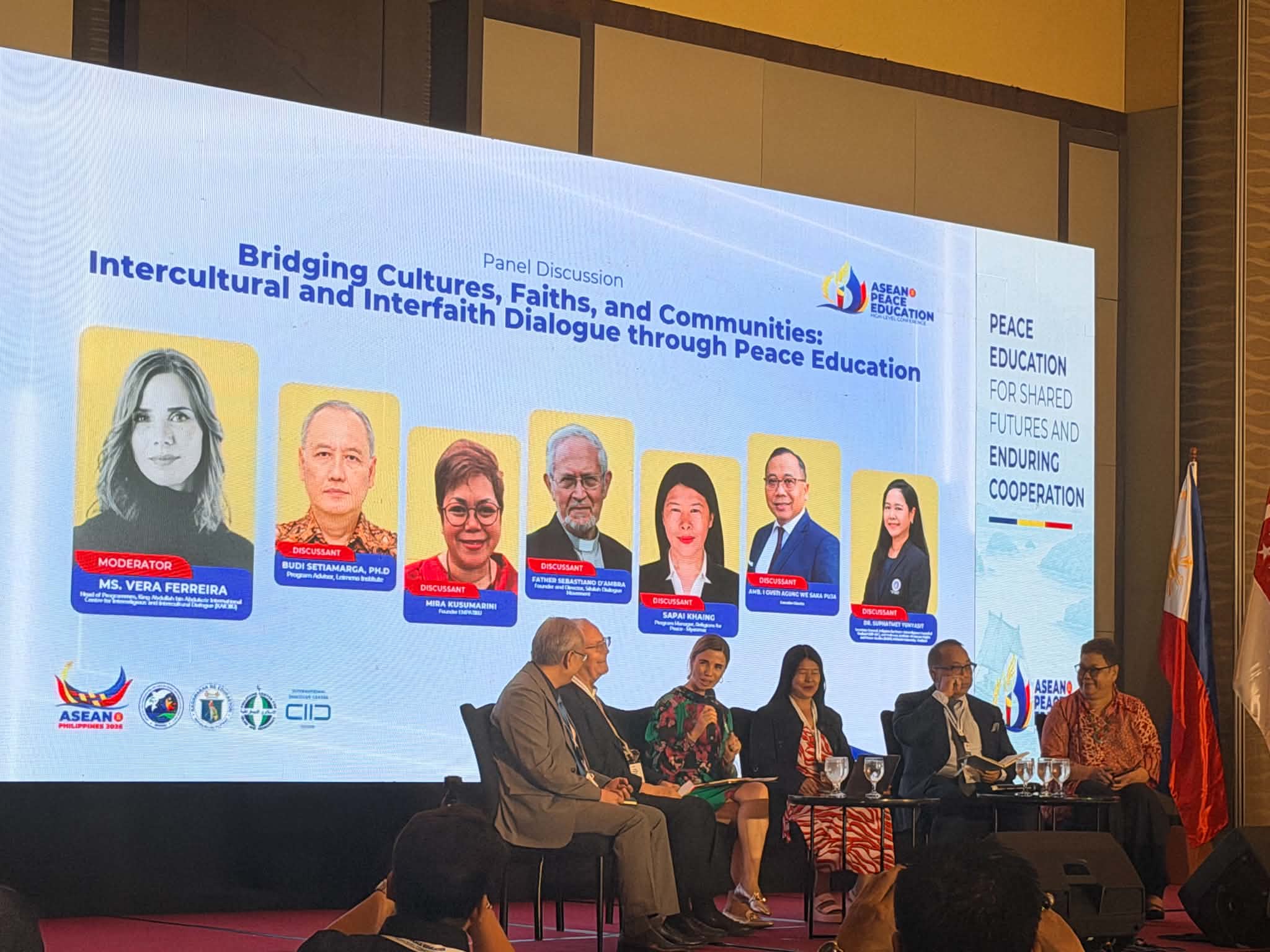
In a collective commitment to peace, inclusivity, regional solidarity, and the pursuit of becoming a National Peace University, officials and peace educators from the Mindanao State University (MSU) System actively participated in the ASEAN Peace Education High-Level Conference, with the theme “Peace Education for Shared Futures and Enduring Cooperation,” held on September 21-24, 2026, at the Grand Ballroom, Crowne Plaza, Manila Galleria, Quezon City, Philippines. The conference convened more than 400 stakeholders- senior education leaders, policymakers, religious and community advocates, and peace educators and practitioners across Southeast Asia to strengthen the role of peace education in building resilient, people-centered ASEAN communities. Indeed, as the organizers remarkably designed, the event served as a high-level regional platform to advance peace education as a strategic enabler of sustainable peace, resilience, and cooperation in Southeast Asia. As Presidential Peace Adviser Secretary Sarmiento articulated, “Peace education should not simply be another subject that we teach. We should look at it as an investment-an investment in the resilience, stability, and future of our societies.” He further affirmed, “And if we want that future, peace education cannot stop at the four walls of the classroom. It must teach empathy, it must deepen intercultural understanding, it must give our young people the ability to resolve differences without violence.”
A distinctive feature of MSU’s participation in the conference was its extensive representation across campuses, including senior leaders; in fact, all MSU campuses, namely, MSU-Main Campus, Marawi; MSU-Iligan Institute of Technology (IIT); MSU-General Santos; MSU-Tawi-Tawi College of Technology and Oceanography (TCTO); MSU at Naawan; MSU-Maguindanao; MSU-Sulu; MSU-Zamboanga Sibugay; MSU-Maigo College of Education, Science and Technology (MCEST); MSU-Sultan Naga Dimaporo (SND); and MSU-Lanao National College of Arts and Trades (LNCAT), were represented by their Institute for Peace and Development in Mindanao (IPDM) directors and selected peace educators. Remarkably, MSU Board of Regents (BOR) and Commission on Higher Education (CHED) Chairperson Shirley C. Agrupis and BOR members Hon. Amina Rasul-Bernardo, Hon. Grace Ali, and Hon. Alizedney Ditucalan were also present, manifesting not only academic participation but also the university’s ongoing contribution to peacebuilding efforts across diverse learning and community settings. This shared MSU presence also stresses MSU’s institutional emphasis on peace education as a living practice, grounded in dialogue, critical reflection, and community engagement. It is worth reiterating that MSU is considered a trailblazer in peace education not only because it was founded as a social laboratory for national unity, but also because it pioneered a system-wide three-unit peace course, FPE 101 (Fundamentals of Peace Education).
The conference featured high-level keynote speeches, plenary addresses, round table discussions, and parallel sessions. In her keynote speech, Chairperson Agrupis underscored the vital role of education in peacebuilding, remarking, “Education should be considered part of the long-term capacity of society to manage differences, before conflicts take hold.” Correspondingly, Dr. Rasul-Bernardo, President of the Philippine Center for Islamic and Democracy (PCID), noted, “If violence enters the lives of our children in the home through a screen, then perhaps peace education should prepare our children for the world behind the screen.” Similarly, this unified message was emphasized during the plenary discussions, which pointed out that peace education must extend far beyond the classroom to equip the next generation with important skills such as critical thinking, empathy, dialogue, intercultural understanding, and conflict resolution.
In a significant panel role, Chancellor Dr. Alizedney M. Ditucalan of MSU-Iligan Institute of Technology served as one of the key panel discussants in one of the conference’s plenary sessions titled “Building Peace from the Ground Up: Integrating Peace Education into Foundational Learning.” His participation highlighted MSU IIT’s perspective on integrating peace education into foundational learning systems, particularly embedding empathy, respect, dialogue, and conflict transformation in early and formative educational experiences. Moreover, the IPDM Executive Director of MSU Main Campus, Marawi, Dr. Acram Latip, also served as a panelist/discussant in the side event led by UNDP titled “Strengthening Digital Safety, Resilience, and Peacebuilding: Advancing Peace Education in Online Spaces,” sharing MSU’s experience in peace education initiatives that strengthen social cohesion and help learners navigate differences constructively. His engagement reinforced the shared conference theme that peace education must be translated from policy concepts into practical learning approaches that learners can experience and apply in daily life.
Additionally, the conference showcased the participation of former MSU System Executive Vice President Abdulcader M. Ayo and Director Irish Fernandez Dalona of MSU-IIT as panelists in the side events of the conference. Dr. Ayo, in particular, delivered a talk along with professors from Leimena Institute, Indonesia, about how cross-cultural religious literacy (CCRL) bridges divides through Mindanao State University’s institutional peace education and the Leimena Institute’s training programs featuring collaborative music as an innovative pedagogical framework.
Notably, across the conference program—including opening engagements, plenary discussions, roundtable dialogues, cultural and solidarity events, and other side activities—other MSU delegates actively participated in various side events, complementing formal panel contributions with continuous learning and constructive exchange. In fact, Dr. Godiva E. Rivera and Dr. Johara D. Alangca-Azis, both pioneering peace educators from MSU-Main Campus, as well as Director Najifa Macaraya of MSU-General Santos, actively shared their respective experiences in the side events they attended, which created opportunities to deepen collaboration, identify shared priorities, and strengthen linkages among peace education stakeholders across ASEAN Member States.
Furthermore, throughout the conference, MSU’s peacebuilding work and educational innovations were represented not only through formal panel participation but also through engagement in conference sessions and dialogue spaces. Through these contributions, MSU advanced a consistent message: that peace education is essential not only for classroom instruction but for strengthening communities and preventing violence and polarization through informed, values-based learning. As the ASEAN region continues to respond to emerging social challenges—such as hate speech, misinformation, and identity-based tensions—the conference reaffirmed the urgency of peace education as a cross-pillar enabler of community resilience. The meaningful participation of MSU officials and peace educators, therefore, demonstrated that Mindanao State University, as an institution of higher learning, remains firmly engaged in this regional direction—contributing experience, perspectives, and commitments toward a peaceful, resilient, inclusive, and people-centered future.
Ultimately, MSU’s participation exhibited a unified and consistent institutional stance: peace education is most powerful when it is practiced collectively through leadership, curriculum transformation, educator engagement, and community-based approaches that nurture respect, compassion, and constructive engagement across differences.
Alhamdulillah! We thank the MSU System President, Atty. Paisalin P.D. Tago, for his steadfast support for peace education initiatives, genuine enthusiasm, and unwavering service to the university as it pursues its aspiration to become a National Peace University. Mabuhay, Pamantasang Mindanao! Mabuhay ang Inklusibong Pamantasan!