By: Acram A. LAtiph
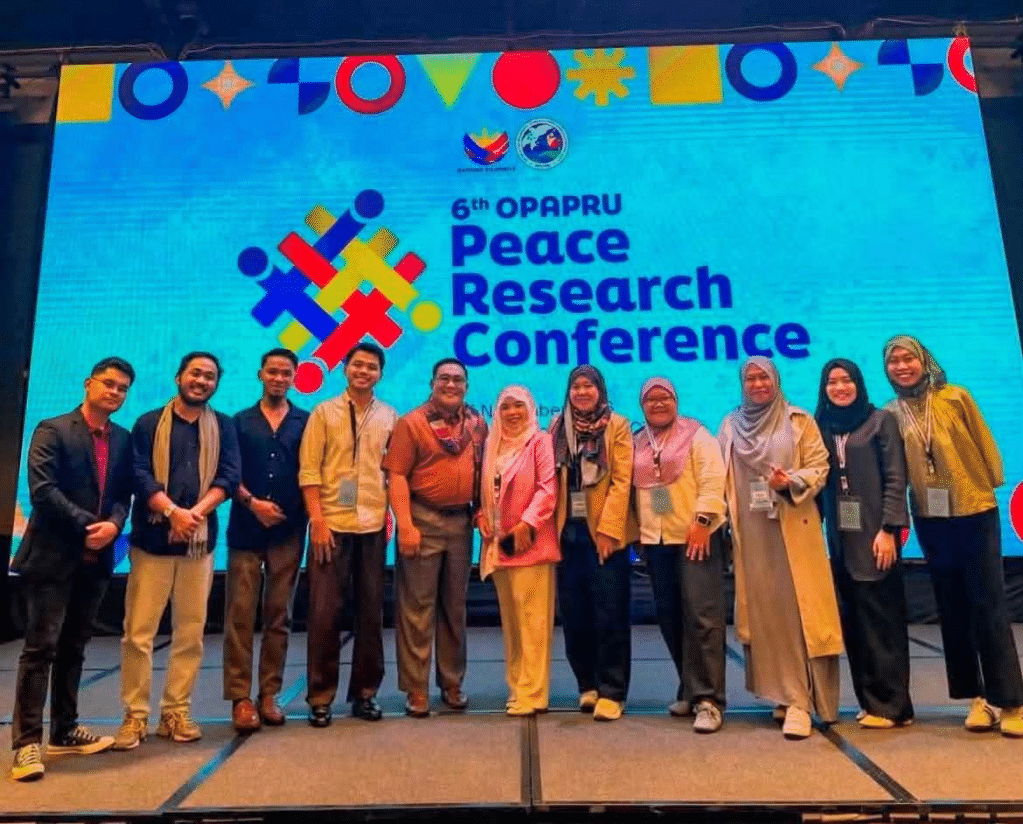
Mindanao State University (MSU) System reaffirmed its institutional leadership in peace education and localized research at the 6th OPAPRU Peace Research Conference, held on November 4–5, 2026, at Chardonnay by Astoria, Pasig City. Carrying the theme “Localizing Peace: Reframing Peace Research, Epistemologies, and Practices Through Local Perspectives,” the national gathering convened peacebuilders, academics, and policymakers to decolonize peace methodologies through ground-up local narratives and indigenous knowledge systems.
System-Wide Leadership & Delegation The IPDM Network was represented by a unified delegation of campus leaders, directors, faculty, and peace scholars across the MSU System. Campus leadership was anchored by Director Amima M. Caiber (MSU Maigo Campus) and Director Settie-Zhymah Sarip Padate (MSU Lanao del Norte Agricultural College – SND Campus), alongside core research and administrative team members Dr. Khayronesah Abbas, Reemar Alonsagay, and Jumadir Mungkon. Delegates participating from across the system also included Dr. Johara Alangca-Azis, Mr. Jerald S. Saidina (Peace Research Coordinator, MSU GenSan; Faculty of Political Science Department, CSSH), Sittie Ainah Mohamad (MSU Maguindanao), and Nouf Mohammad (MSU Maguindanao). The delegation was further joined by Dr. Abdulla “Lharz” Mohammad and Prof. Sadikul U. Abdulbasil, MALTE (MSU-Sulu), alongside Eunicito Omison Barreno, who presented research on peace journalism following the Dimaporo Gymnasium tragedy.
Best Research Paper of the Conference Award Highlighting MSU’s academic excellence on the national stage, Dr. Abdulla “Lharz” Mohammad and Prof. Sadikul U. Abdulbasil, MALTE were awarded the prestigious Best Research Paper of the Conference for their study, “From Adat to Peace: Examining the Efficacy of Tausug Indigenous Knowledge in Peacebuilding in Sulu.” The recognition celebrates their exploration of traditional Tausug customary law (Adat) in resolving local conflicts and sustaining community resilience.
Direct Support for the UN Sustainable Development Goals (SDGs):
SDG 16 (Peace, Justice & Strong Institutions): Localizing conflict resolution and peace pedagogy. •
SDG 4 (Quality Education): Advancing transformative peace education across campuses. •
SDG 5 & 10 (Gender Equality & Reduced Inequalities): Amplifying women’s leadership and indigenous community voices. •
SDG 13 & 17 (Climate Action & Partnerships): Integrating conflict sensitivity into climate policy and fostering multi-sectoral collaborations. By bridging academic rigor with community-grounded peacebuilding, the IPDM Network and the MSU System continue to serve as vital catalysts for sustainable development, peace education, and cultural solidarity in Mindanao.
Tagging & Mentions: Office of the Presidential Adviser on Peace, Reconciliation and Unity (OPAPRU) | Mindanao State University System | Institute for Peace and Development in Mindanao (IPDM) Network | MSU-Sulu | Hangadhulat | MSU Maigo | MSU-SND | MSU GenSan | MSU Maguindanao #MSUIPDM #NationalPeaceUniversity #PeaceEducation #LocalizingPeace #OPAPRU #PeaceResearch #MindanaoStateUniversity #MSUSulu #MSUGenSan #MSUMaguindanao #TausugAdat #Bangsamoro #MSUSystem #SDG16 #SDG4 #SDGs #DecolonizingPeace #MindanaoPeace