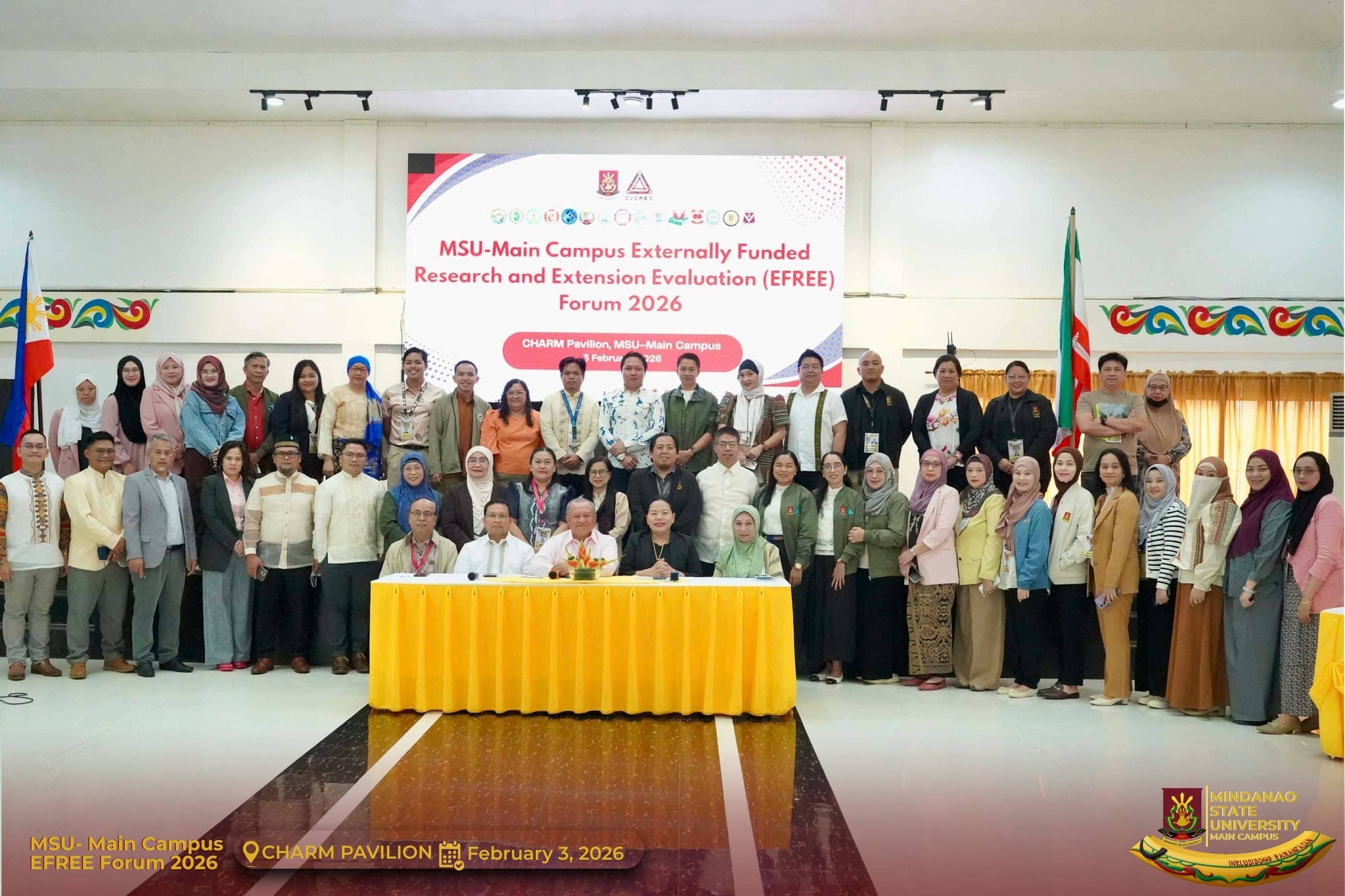
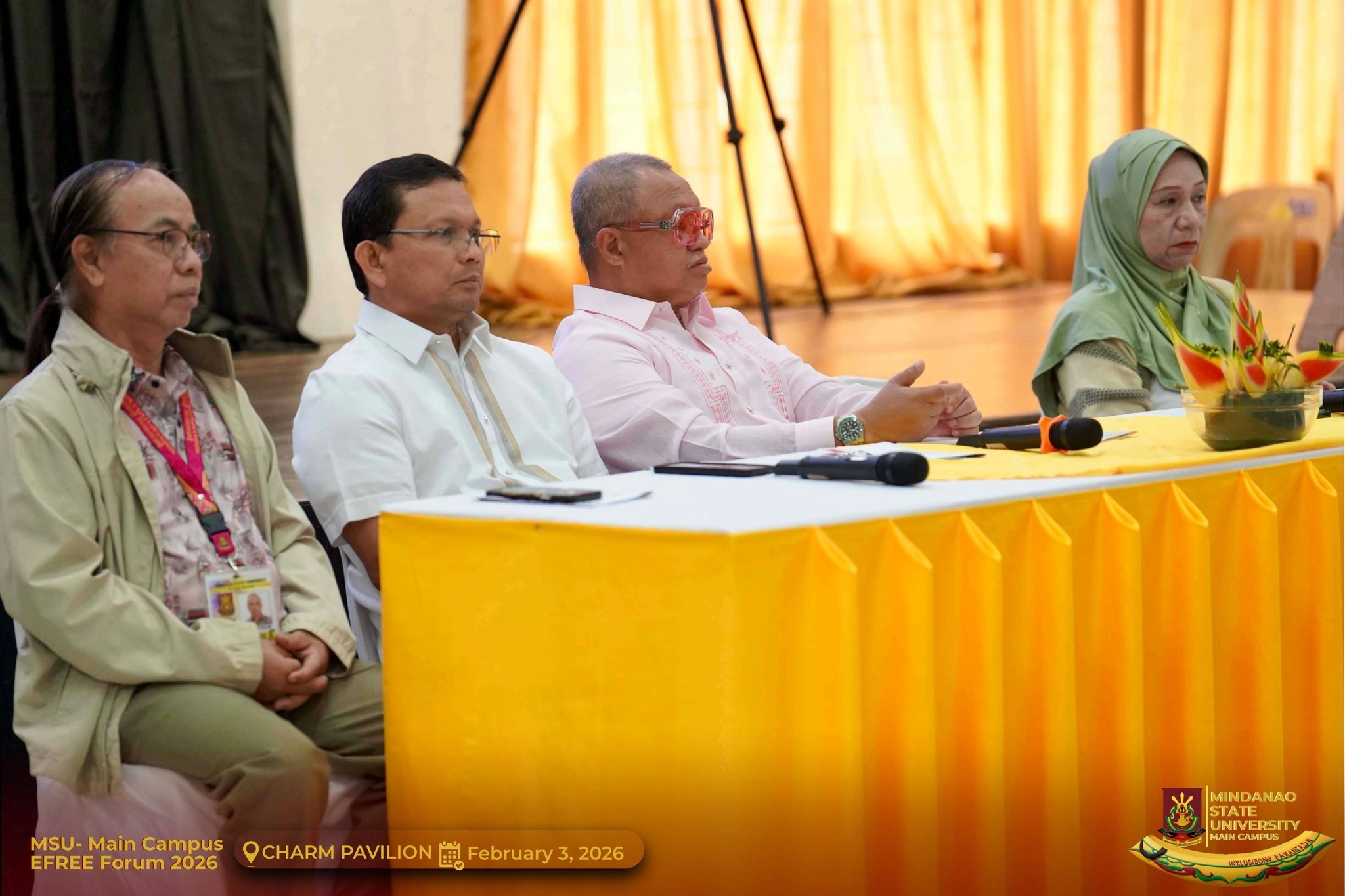
The Externally Funded Research and Extension Evaluation (EFREE) Forum 2026 has convened today, February 3, 2026, at the CHTM Pavilion. This whole-day activity serves as a vital platform for the evaluation, presentation, and dissemination of various research and extension projects implemented by MSU-Main Campus. As a key target of the Office of the Vice Chancellor for Research, Extension, and Development (OVCRED), headed by Vice Chancellor Dr. Annie Mae V. Cruda-Berowa, the forum mandates regular monitoring to ensure that faculty-led initiatives remain impactful and sustainable.
The event is designed to promote accountability, transparency, and quality assurance while providing a space for constructive feedback from evaluators and stakeholders. By assessing outcomes and impacts in real-time, the forum strengthens research-extension linkages across different units and fosters institutional learning.
The session is highlighted by the presence of MSU System President Atty. Paisalin P.D. Tago, CPA, whose attendance underscores the administration’s commitment to high-standard scholarship. Addressing the participants, the President emphasized that “research that ends in reports, shelves, or archives fails to meet its highest purpose.” He noted that in a public university like Mindanao State University, research must move beyond documentation and translate into real and lasting benefits for the communities.
As the presentations continue throughout the day, the forum remains focused on the University’s broader mandate of social transformation. As an institution established to contribute to national development, MSU carries a responsibility that goes beyond intellectual production. The ongoing discussions reiterate that MSU research must inform policy, extension programs must empower communities, and innovations must respond to real societal needs.